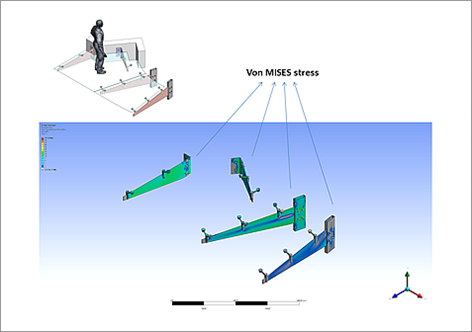
INGEO works on structural analysis that comprises the set of physical laws and mathematics required to study and predict the behavior of structures.
The subjects of structural analysis are engineering artifacts whose integrity is judged largely based upon their ability to withstand loads; they commonly include buildings, bridges, aircraft, and ships.
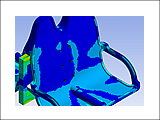 Structural analysis incorporates the fields of mechanics and dynamics as well as the many failure theories. From a theoretical perspective the primary goal of structural analysis is the computation of deformations, internal forces, and stresses. Structural analysis incorporates the fields of mechanics and dynamics as well as the many failure theories. From a theoretical perspective the primary goal of structural analysis is the computation of deformations, internal forces, and stresses.
In practice, structural analysis can be viewed more abstractly as a method to drive the engineering design process or prove the soundness of a design without a dependence on directly testing it.
To perform an accurate analysis a structural engineer must determine such information as structural loads, geometry, support conditions, and materials properties. The results of such an analysis typically include support reactions, stresses and displacements.
This information is then compared to criteria that indicate the conditions of failure. Advanced structural analysis may examine dynamic response, stability and non-linear behavior.
There are three approaches to the analysis:
- the mechanics of materials approach (also known as strength of materials);
- the elasticity theory approach (which is actually a special case of the more general field of continuum mechanics);
- the finite element approach.
The first two make use of analytical formulations which apply mostly to simple linear elastic models, lead to closed-form solutions, and can often be solved by hand.
The finite element approach is actually a numerical method for solving differential equations generated by theories of mechanics such as elasticity theory and strength of materials.
However, the Finite Element Analysis (FEA) depends heavily on the processing power of computers and is more applicable to structures of arbitrary size and complexity.
Steps of a structural analysis of dental implant in function of ISO14801
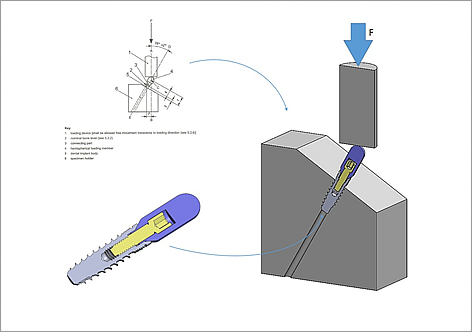 |
| 3D CAD model for ISO14801 test |
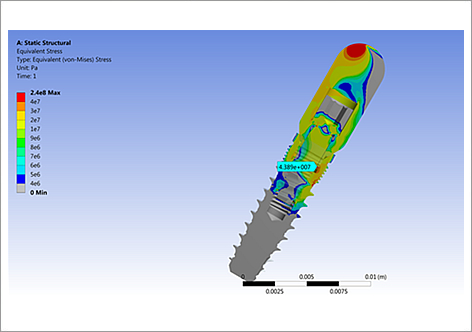 |
| von MISES stress on dental implant from ISO 14801 test |
Steps of a structural analysis of seat part
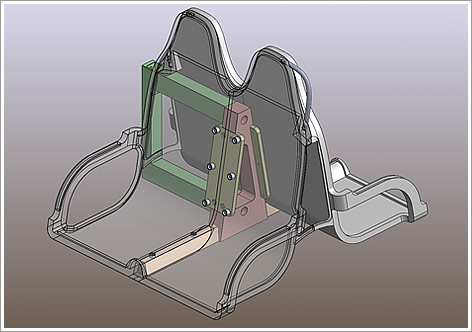 |
| 3D CAD model of seat parts |
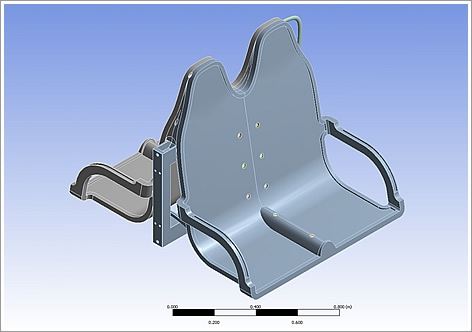 |
| Choice of materials to be used during the finite element simulation |
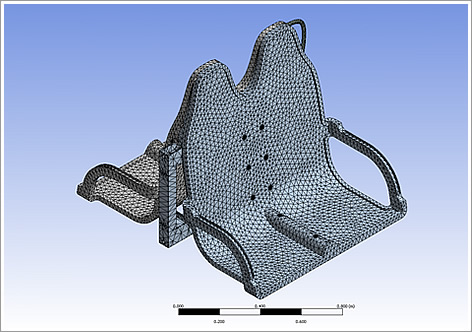 |
| Mesh creation |
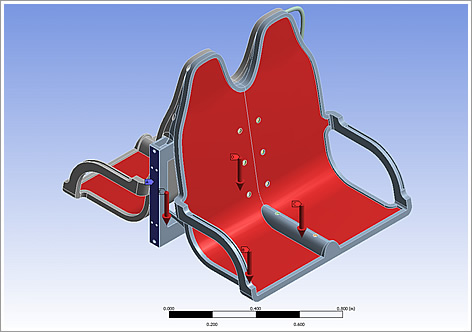 |
| Bond determination |
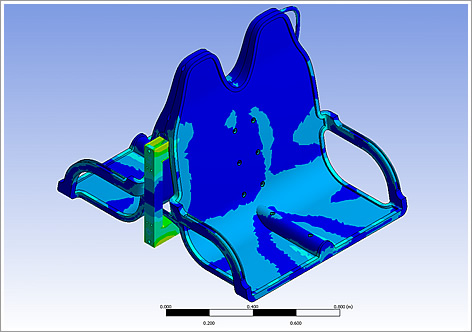 |
| Calculation of stress and safety yield factor |
In addition to more traditional structural analysis INGEO is able to develop analytical computational fluid dynamics (CFD), motion analysis, thermal analysis and analysis about issues such as civil engineering plans and space frames, shells, tanks, planes and space grids, plates, volumetric structures, joints and profiles.
Steps of a structural analysis of reticular structure
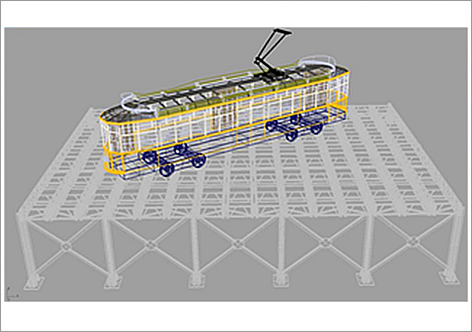
Example of reticular structure developed by INGEO
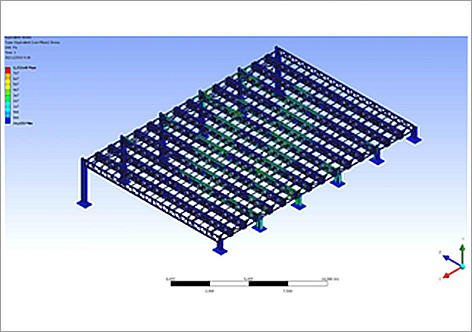
Stress distribution on reticular structure obtained by means of von MISES
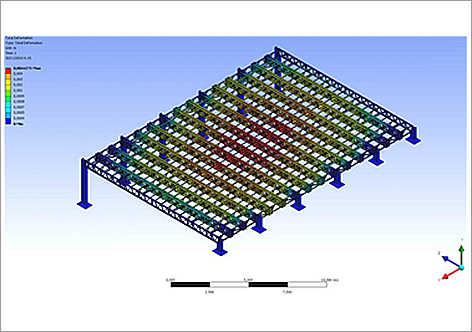
Strain distribution on reticular structure obtained by means of von MISES
Steps of a structural analysis of polyethylene tank
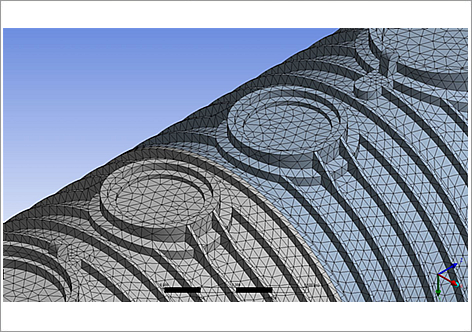
Mesh on plyethylene tank (STARPLAST tank)
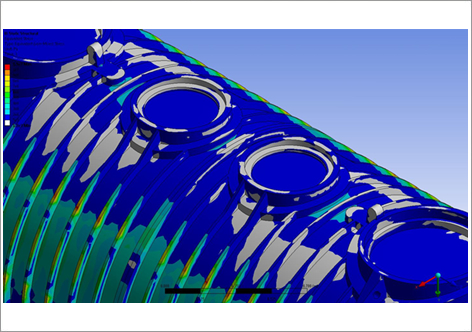
Stress distribution on plyethylene tank according to von MISES (STARPLAST tank)
CFD analysis of television antennas
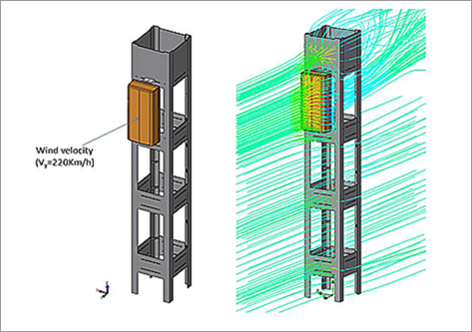
Frontal action wind with 220 km/h of speed
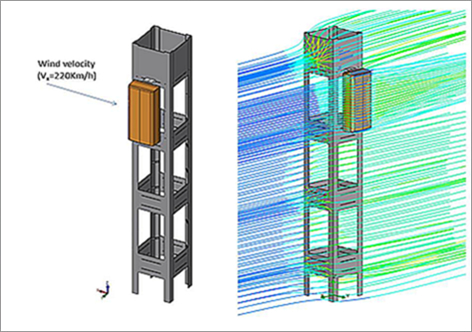
Lateral action wind with 220 km/h of speed
CFD analysis of crash helmet with European man
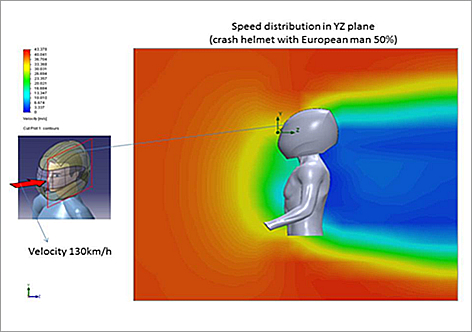 |
| Velocity distribution using 130km/h |
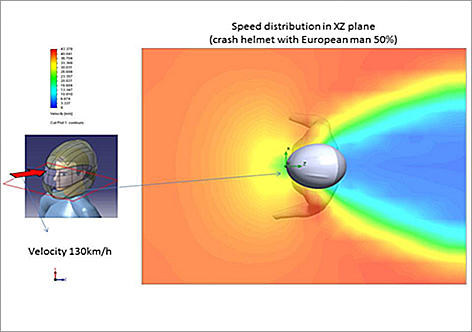 |
| Velocity distribution using 130km/h |
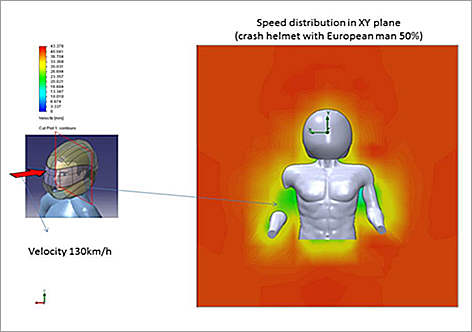 |
| Velocity distribution using 130km/h |
CFD analysis of a gel for dental applications
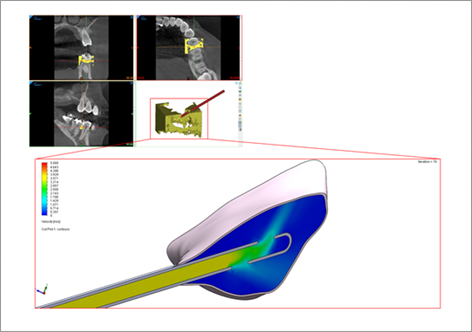 |
| Distribution of gel velocities in the periodontal pocket |
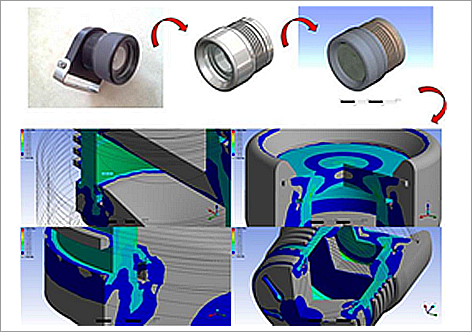
FEA analysis of glass for spotlights offshore
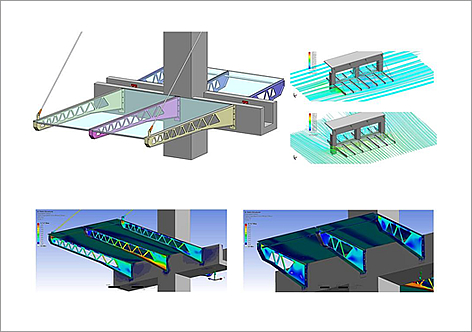
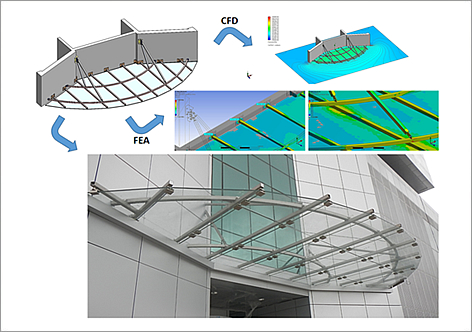
Steps of CFD and FEA on a metal-glass industrial structure
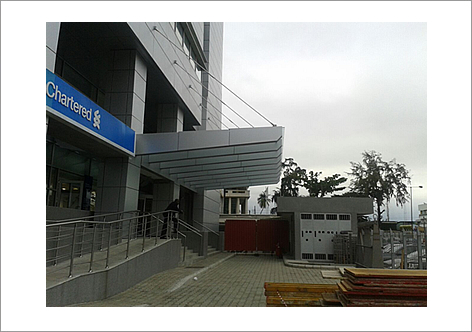
After the project and the structural analysis, the installation.
A second installation metal-glass structure.
In figure below is shown FEA on glass.
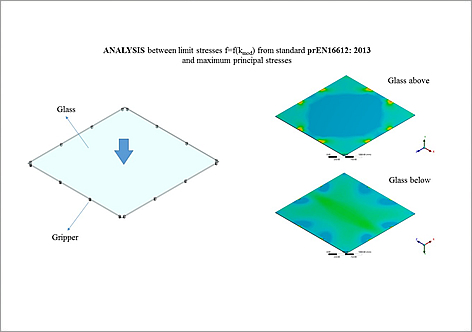 |
| From CAD to FEA of a glass (MASPERO ELEVATORI SpA) |
In figure below is shown FEA on a structure glass-steel.
In the figure below a structural analysis of the glass of a lift cabin (thanks to MASPERO ELEVATORI S.p.A.).
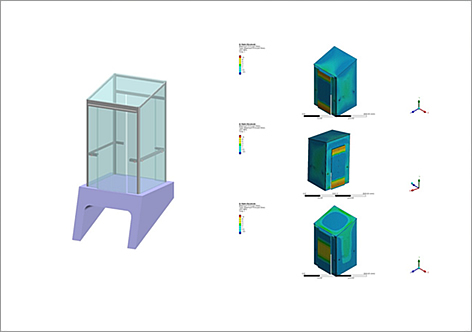 |
| From the CAD model to the FEA analysis of glass walls |
In the figure below a structural analysis of the frame of a lift cabin (thanks to MASPERO ELEVATORI S.p.A.).
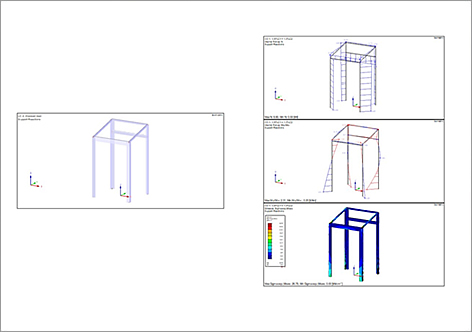 |
| From the CAD model to the FEA analysis of a frame |
For further informations about Structural analysis, please contact PhD Luigi Paracchini, phone number +39 0321 921654 (during office hours), or send an email to info@ingeosnc.it
|